Skip to content

ethics

10-year-old gets a tattoo, mother gets arrested

By Brian Earp

Follow Brian on Twitter by clicking here.

See Brian’s most recent prior post on this blog here.

See a list of all of Brian’s previous posts here.


Inking arms, piercing ears, and removing foreskins: The inconsistency of parental consent laws in the State of Georgia 

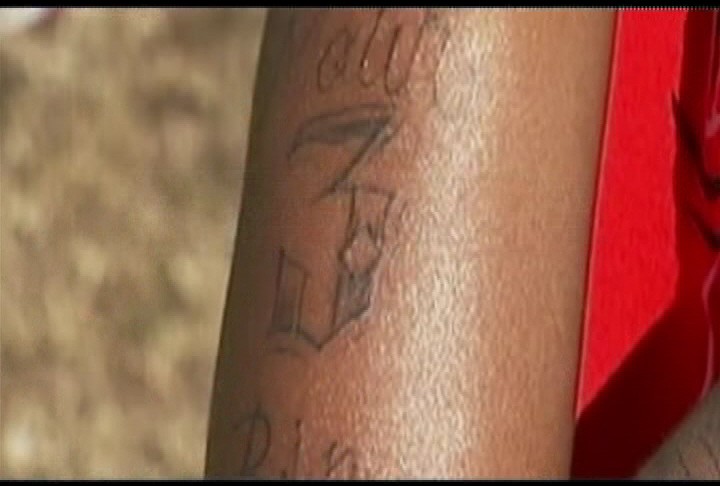
Gaquan Napier watched his older brother die in Acworth, Georgia after being hit by a speeding car. He was with him in those numbing final moments. And now Gaquan wants to keep his brother close to his own heart as he picks up the pieces and moves through life: in the form of a tattoo on his upper arm. Malik (that’s his brother’s name) plus the numbers from Malik’s old basketball jersey. Rest in peace. A memorial to his sibling and best friend, whose life was cut tragically short.

Gaquan is ten years old. So he asked his mother, Chuntera Napier, about the tattoo. She was moved by the request, by the sincerity and maturity of her son’s motivations. She assented. She took Gaquan to have the remembrance he wanted etched into his arm in ink.

Now stop the presses. Chuntera was arrested last week under child cruelty laws and for being party to a crime. Someone at Gaquan’s school had seen his tattoo and tattled to the authorities. But what was the offense?

Read More »10-year-old gets a tattoo, mother gets arrested

What is so bad about polygamy?

By Brian Earp (Follow Brian on Twitter by clicking here.)

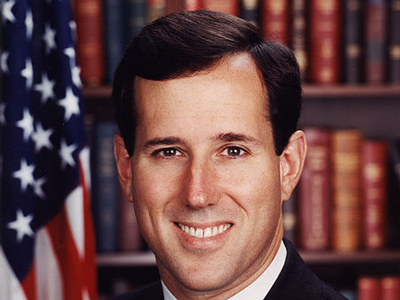
What do gay marriage and polygamy have in common?

To find out, watch this exchange between US Republican presidential hopeful Rick Santorum, and a New Hampshire college student.  Here’s an edit to give the gist:

Student: How about the ideas that all men are created equal, and the rights to happiness and liberty? [Applause.]

Santorum: Ok, so — Are we saying that everyone should have the right to marry?

Audience: Yes! Yes!

Santorum: Everyone? Ok, so, anybody can marry anybody else.

Audience: Yes, yes!

Santorum: So anyone can marry several people? …

Read More »What is so bad about polygamy?

Experimenting with oversight with more bite?

It was probably hard for the US National Science Advisory Board for Biosecurity (NSABB) to avoid getting plenty of coal in its Christmas stockings this year, sent from various parties who felt NSABB were either stifling academic freedom or not doing enough to protect humanity. So much for good intentions.

The background is the potentially risky experiments on demonstrating the pandemic potential of bird flu: NSABB urged that the resulting papers not include “the methodological and other details that could enable replication of the experiments by those who would seek to do harm”. But it can merely advice, and is fairly rarely called upon to review potentially risky papers. Do we need something with more teeth, or will free and open research protect us better?

Read More »Experimenting with oversight with more bite?

Ferretting out fearsome flu: should we make pandemic bird flu viruses?

Scientists have made a new strain of bird flu that most likely could spread between humans, triggering a pandemic if it were released. A misguided project, or a good idea? How should we handle dual use research where merely knowing something can be risky, yet this information can be relevant for reducing other risks?

Read More »Ferretting out fearsome flu: should we make pandemic bird flu viruses?

Sam Harris is wrong about science and morality

By Brian Earp (Follow Brian on Twitter by clicking here.)

WATCH MY EXCHANGE WITH SAM HARRIS AT OXFORDON YOUTUBE HERE.

I just finished a booklet by “New Atheist” Sam Harris — on lying — and I plan to write about it in the coming days. But I want to dig up an older Harris book, The Moral Landscape, so that I may express my hitherto un-expressed puzzlement about Harris’ (aging) “bold new” claim — presented in this book — that science can “determine human values” or “tell us what’s objectively true about morality” or “give us answers about right and wrong,” and the like.

In his new book (the one about lying) Harris says, in effect, you should never, ever, do it — yet his pretense in The Moral Landscape to be revolutionizing moral philosophy seems to me the very height of dishonesty. What he actually does in his book is plain old secular moral reasoning — as non-religious philosophers have been doing for a very long time — but he claims that he’s using science to decide right from wrong. That Harris could be naive enough to think he’s really bridged the famous “is/ought” chasm seems unlikely (Harris is a very smart writer and researcher, and I tend to like a lot of what he publishes), and so I submit that he’s exaggerating* to sell books. Shame on him (or his publisher).

*A previous version of this post had the word “lying” here, but I was told that my rhetorical flourish might be interpreted as libel. I hope “exaggerating” is sufficiently safe. Now onward to my argument:

Read More »Sam Harris is wrong about science and morality

Holier and happier than thou?

Are ethical people happier? Many philosophers have claimed this, from Plato and Aristotle onwards. A new study claims it is empirically true, or more exactly that ethical people are more satisfied with life.

The 2009 study looked at cross-country data from the World Values Survey from the US, Canada, Mexico and Brazil. It looked at  people who agreed with the view that it is never justifiable to engage in ethically questionable behaviours like avoiding fares on public transports, cheating on taxes or taking bribes (35%) compared the rest. Controlling for things like gender, income, age, health, being married etc. the study found being ‘ethical’ by this standard increased the likeliehood of being very satisfied with life fairly significantly. The effect size is like a modest increase in income. A good reason to try to become a better person, or (as the paper suggests) for governments that are trying to increase subjective well being to do it by improving moral conduct… or is it?

Read More »Holier and happier than thou?

Don’t be objective about your subjectivity

“Morality is just social convention, so torture isn’t wrong.” Hearing that thought was a sobering recent experience, especially when you’re trying to get people to care and worry about existential risks. But that’s just a vivid and extreme example of a more commonly expressed sentiment:

P: “If there is no objective morality, then anything goes.”

Now, call those who express that sentiment P-expressers. Who are these people? In my experience, these are individuals who have subjectivised their ethics, but not their meta-ethics, and ended up nihilists as a result.

Read More »Don’t be objective about your subjectivity

Legalize heroin

By Brian Earp

Follow Brian on Twitter by clicking here.


Forget about “medical marijuana.” Isn’t it time to legalize heroin in the United States? Recreational cocaine? Ecstasy? LSD? How about the whole nefarious basketful of so-called ‘harder’ drugs?

Yes, it is, says Ron Paul, a fourteen-term libertarian congressman and obstetrician from the state of Texas. It’s a view shared by virtually none of his Republican colleagues, nor, for that matter, very many Democrats. Nor really anyone in the “mainstream” of American politics. But in this post, I’ll argue that he’s right.

Paul—who is currently making his third bid for President of the United States—offered his perspective to comedian and Daily Show host Jon Stewart in an interview earlier this week:

Read More »Legalize heroin

Buying authenticity: plagiarism checking and counter-checking

Alex Tabarrok on Marginal Revolution posted about how the software company Turnitin is not just helping schools detect student plagiarism, but also providing WriteCheck, a tool for checking that a paper is non-infringing. Are they providing a useful service for conscientious students to avoid unconscious infringement, or just playing both sides of the fence, profiting from an arms race where they sell all the arms?

Read More »Buying authenticity: plagiarism checking and counter-checking