Jewish

Religious vs. secular ethics and a note about respect

By Brian Earp

See Brian’s most recent previous post by clicking here.

See all of Brian’s previous posts by clicking here.

Follow Brian on Twitter by clicking here.

This is a rough draft of a lecture delivered on October 1st, 2012, at the 12th Annual International Symposium on Law, Genital Autonomy, and Children’s Rights (Helsinki, Finland). It will appear in a substantially revised form—as a completed paper—at a later date. If you quote or use any part of this post, please include the following citation and notice:

Earp, B. D. (forthcoming, pre-publication draft). Assessing a religious practice from secular-ethical grounds: Competing metaphysics in the circumcision debate, and a note about respect. To appear in G. C. Denniston, F. M. Hodges, & M. F. Milos (Eds.), Proceedings of the 12th Annual International Symposium on Law, Genital Autonomy, and Children’s Rights, published by Springer. * Note, this is not the finished version of this document, and changes may be made before final publication.

* * * * * *

Hello,

My name is Brian Earp; I am a Research Associate in the philosophy department at the University of Oxford, and I conduct research in practical ethics and medical ethics, among some other topics. As you saw from the program, my topic today is the ethics of infant male circumcision—specifically as it is performed for religious reasons.

Continue reading

Can the religious beliefs of parents justify the nonconsensual cutting of their child’s genitals?

By Brian D. Earp

See Brian’s most recent previous post by clicking here.

See all of Brian’s previous posts by clicking here.

Follow Brian on Twitter by clicking here.

 See updated material below – reply to a critic. 

Of faith and circumcision: Can the religious beliefs of parents justify the nonconsensual cutting of their child’s genitals?

Circumcising minors on religious grounds amounts to grievous bodily harm according to a German court ruling issued on Tuesday. AFP News reports:

The regional court in Cologne, western Germany, ruled that the “fundamental right of the child to bodily integrity outweighed the fundamental rights of the parents. The religious freedom of the parents and their right to educate their child would not be unacceptably compromised, if they were obliged to wait until the child could himself decide to be circumcised.”

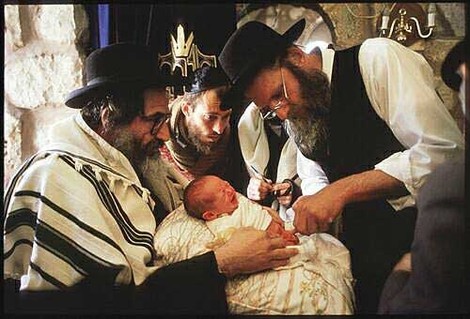
Some Jewish groups are up in arms. They insist that God has “non-negotiably” required that circumcision take place on precisely the eighth day after birth; hence waiting to perform the operation until the child could consent would amount to breaking this keystone covenant with their deity. Using the force of law to delay circumcision, then, is no different from banning it outright, since a delayed circumcision is religiously meaningless.

I don’t find this argument very compelling.

Continue reading

Authors

Affiliations