Bold Private John Smith, VC, modified ‘t’ allele of TPH1 SNP rs2108977
By Charles Foster
There’s a significant association of PTSD symptoms with a particular allele, according to a recently published study from UCLA and Duke. Some of the ethical consequences are already being discussed. One consequence might be military. One might be able to detect and filter out PTSD-vulnerable recruits. Perhaps that’s a kindness. It would certainly seem militarily prudent. There might be legitimate qualms about creating a biologically callous warrior-class, but you’re not creating its components – you’re just collecting them together. You might not want to go to their parties, and you might wonder about the mutually brutalizing effect of corralling them in a barracks, but the exercise is really only a scientifically more informed version of the selection that goes on in any event. It’s not very interesting ethically.
But what if a gene for PTSD-resistance could be inserted or artificially switched on? It doesn’t seem fanciful. Should the military be permitted (or perhaps even required) to PTSD-proof their personnel? Continue reading
Unbelievers are bad and have defective brains
You’d better believe that believers are better.
So far as religiosity is concerned, humanity, say Cooper and Pullig , is divided fairly neatly into three clusters: Skeptics, Nominals and Devouts. The bulk of the evidence suggests that there is a relationship between religiousness and moral reasoning. That relationship, though, is complex. Its anatomy needs a lot of exploration. Cooper’s and Pullig’s exciting and audacious paper, which concerns broadly Christian religiosity amongst marketing students in the US, suggests that narcissism is a factor in explaining why individuals make wrong ethical decisions. That in itself isn’t surprising. Narcissism, for instance, is a predictor of white-collar crime in business: narcissistic individuals tend to think that they are above the laws that govern the behaviour of lesser mortals. What is perhaps surprising is that ethical decision-making was affected by narcissism only in Nominals and Devouts. The reasons for that can be speculated about very entertainingly. But I want to highlight one almost incidental observation: ‘Notably, Skeptics in general exhibit worse ethical judgment than respondents in either of the other two clusters.’
There’s nothing that lawyers shouldn’t do
By Charles Foster
A patient in his 40s with locked-in syndrome, referred to in court only as ‘Martin’, wants to die. His wife cannot bring herself to help him. He would therefore need help from others. He is concerned that would-be helpers might face prosecution under the assisted suicide legislation. In the latest line of attempts to clarify the way that the law of assisted suicide actually works, he will challenge, by way of judicial review proceedings, the criteria used by the DPP in deciding whether or not to prosecute people who assist suicide. The exact nature of that challenge doesn’t matter for present purposes. What does matter is that his lawyers, in preparing the judicial review proceedings, might have to do things that fall within the (necessarily) wide ambit of the offence of ‘encouraging or assisting suicide’. They might, for instance, have to communicate with Dignitas, and find out whether there is a doctor who would be prepared to assist.
Martin’s lawyers therefore sought and obtained a declaration that they could prepare his case without putting themselves in jeopardy. This was hypercautious, and perhaps artfully, strategically melodramatic. But one can hardly blame them for wanting to be safe, and of course it was right to grant the declaration. Whatever one thinks of the morality of assisted suicide or the legal merits of the judicial review application, the court door must be open to everyone. Lawyers must be able, freely and fearlessly, to facilitate the making of even absurd, outrageous, and downright evil submissions. To facilitate an evil submission is a good thing – a public service: it allows the court to express its disapproval.
Law is not an immutable monolith. It doesn’t spring fully formed from the loins of the legislature. It is chiselled by all sorts of people – but most notably by judges, assisted by the contentions of lawyers – until it’s workable and fits the demands of the society it is supposed to reflect, serve and sustain.
Lawyers, then – and particularly the most cynically mercenary of litigators – are essential public servants. Their professional ethics demand that they put personal preference to one side in fulfilling this function.
This is very costly for the lawyers themselves – although I’m not expecting much sympathy. St Paul observed that a man who sleeps with a prostitute ‘becomes one with her’ – unites his soul with her. And when he pulls away he leaves a bit of his own soul behind. Eventually he’s not got much of his own soul left: it’s distributed around the brothels.
It’s rather like that with lawyers. Lawyers stand on metaphorical (and sometimes actual) street corners with their gowns hitched up, ready to sleep with whoever drives up. If you identify sufficiently with your client, you’ll eventually lose what you are. That great theologian Horace Rumpole noted that the first casualty of the law is sensitivity. The second is your soul. Lawyers, for a decent hourly rate, make a Faustian bargain. It’s negotiated by their Mephistophelean clients, but the soul’s ultimately eaten up by the Greater Good.
Note what’s really happening here. The lawyers don’t, at least at first, change their own beliefs. Personal morality isn’t ablated: it just keeps its mouth shut, thinking, because of the Bargain, that it’s not entitled to a voice. Philosophically minded lawyers might try to justify the Bargain to themselves in the early hours of the morning by saying that the public utility of free expression is a good so great that its service (even when it means the truncation of oneself) is perfect freedom.
The trouble with not using voices, limbs and consciences is that they atrophy. Being a lawyer is desperately dangerous. But the risk isn’t taken just for £400 an hour: it’s taken for you. I hope you’re grateful.
So: by signing the professional register, lawyers have signed away the right to conscientious objection.
But they are, I think, the only professionals who do this. Julian Savulescu is wrong to insist that a doctor who refuses to do abortions should – at least if there’s an insufficient supply of abortionists – forfeit her right to be a doctor[1]. A doctor who leaves her conscience along with her shoes outside the operating theatre is simply a bad doctor. Whole human beings need to be treated by whole human beings, and a doctor whose conscience has been excised pursuant to some misguided deference to supposed professional obligation is not a whole human being. Just as a proper doctor is not a mere functionary, doing what the patient insists, so a proper Parliamentarian is not merely a mouthpiece, slavishly parroting, but in Parliamentary language, what his constituents say. Burke rightly said: ‘Your representative owes you, not his industry only, but his judgment; and he betrays, instead of serving you, if he sacrifices it to your opinion.’[2]
Lawyers – or at least litigators in any country where the courts can be trusted- are in a unique position. Their right of conscientious objection evaporates because, if it persisted, some things might be left unsaid, unexamined, and unjudged – to the detriment of the society of which we are all a part. There are no compelling analogies with other professions (and no, journalists don’t come close).
So: hug a lawyer: he’s risking damnation on your behalf.
Skipping intuitively over the is-ought gap
By Charles Foster
I spent a lot of the weekend at a very good conference entitled Moral Evil in Practical Ethics.
There was, I think, a complete or almost complete consensus about many things. Here are two: (1) Evil exists, and is of a different quality from merely sub-optimal moral behaviour. (2) To recognise evil implied a duty to do something to combat it. Everyone in the room seemed to see (2) as a corollary of (1).
This second proposition is a classic ‘ought’ claim. But how did we get there? The audience included many distinguished philosophers. Were we all plunging naively but disastrously into the is-ought gap? Was the conclusion sloppily reached, and untenable? Continue reading
Why philosophers should celebrate Christmas
By Charles Foster
Christmas comes but once a year. But that is no reason to let down your philosophical guard. Here are four reasons why it might be philosophically justifiable to celebrate Christmas. Continue reading
The cost of living and the cost of dying
X, a patient with reliably diagnosed PVS, lies in a hospital bed for years, fed via a nasogastric tube. He has not, and by definition never will have, any capacity for pain, pleasure or any sort of sensation. Devoted family members come each day to sit by his bedside, but he has no idea that they are devoted, or that they exist.
It is expensive to keep him alive. He occupies a bed and consumes a good deal of nursing time.
The NHS Trust responsible for his care has a limited budget. It decides that the money spent on maintaining his merely biological life would be better spent on dialysis machines. It can, and does, justify its decision in purely utilitarian terms. It writes in the minutes of the relevant committee meeting: ‘For the money we spend keeping X alive, we can save the lives of 10 kidney patients, each of whom will have a good quality of life for many years. The QALY arithmetic makes X’s continued existence nonsensical.’ Continue reading
My son’s dyslexic, and I’m glad
By Charles Foster
My son is dyslexic, and I’m glad.
Most people think that I am deranged or callous. But I have two related reasons, both of which seem to me to be good.
The first is that his dyslexia is an inextricable part of him. I can’t say: ‘This is the pathological bit, which I resent’, as one might say of a tumour. Take away his dyslexia, and he wouldn’t be the same person, but able to read and write. He wouldn’t be him. That would be far too high a price for me to pay. And for him to pay? Well, there you run into Parfit’s non-identity problem.
Is a child a blessing?
By Charles Foster
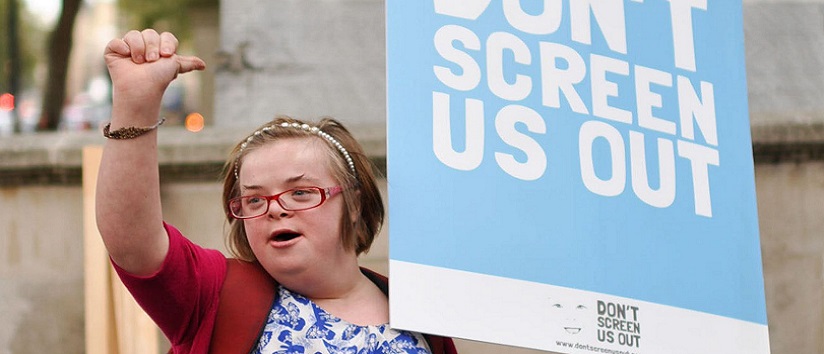
Three years ago Ana Mejia bore a son, Bryan Santana. To her surprise he had no arms and only one leg. I should have been warned about this, she recently told a Florida court. It was negligent not to warn me. Had I been warned, I would have had an abortion. She asked the court for $9 million compensation. The jury gave her $4.5 million.
The disability rights lobby is predictably outraged. Why, they say, should it be presumed (as it clearly is), that a disabled person’s life isn’t worth living?
If that is Ana Mejia’s presumption, then (at least in relation to a child as relatively mildly disabled as Bryan) it is plainly reprehensible. I don’t know her motivation, but I doubt that she saw it that way. Many parents in her situation (and this is a very common issue in medico-legal practice) don’t make their decisions on the basis of their child’s quality of life at all. A much commoner thought is: ‘A disabled child will disrupt my own life. One of the purposes of pre-natal screening is to enable me to decline to bring into the world a child who does not fit with my ideas about how I should be living my life.’ I will call this thought the ‘pre-natal screening default thought’ (PNSD). Continue reading
Philosophy is the transformation of sheep
By Charles Foster
Over the last week English hoodies took to the streets to burn, smash and pillage and, (an almost equally distressing sight), the pop-sociologists of England took to the op-ed columns to tell us why. We’ve had no end of explanations. I’m no more qualified to add to them than most of the original writers were to promulgate them. But whatever the explanation is, it has to account for the fact that this was by no means a primal scream from the nation’s disenfranchised: alongside the youths who may have been expressing their turbulent pasts and hopeless presents, were estate agents, Olympic ambassadors and law students who were ruining their promising futures. The deep causes are beyond me, but the most proximate, obvious (and possibly the only) cause for the vast majority was simply that they were following others. Why did A get involved? Because B did. And why did B get involved? Because C did. At one (and perhaps all levels), this was no more a revolution than sheep baa-ing after each other through a gate.
If alienation was the cause, as many said, from what were the participants alienated? From their ability to make up their own minds, and hence from themselves. If disenfranchisement, from what decision-making process? Their own. Continue reading
When it’s unethical to be a well-published academic
by Charles Foster
There’s a huge number of journals publishing papers about ethics. Would the world be poorer, less ethically well adjusted, or less wise, if half of them went out of business? I doubt it. Quite the opposite, in fact. Less, famously, is more. Let’s face it: there’s little or nothing that’s new in most of the papers we write. We write them because we feel that we should; because our ‘career’ or our self-esteem demands it, or, more likely, because the department needs to put in a long list of publications in order to justify its existence. The fact of a publication is more important than its quality.
In order to justify the recycling of old thoughts, and to convince ourselves and our readers that we’re really smart, we write our papers in impenetrable jargon. Whole papers are devoted to saying in new technical language what was simply and accessibly said in words of one syllable in the 1930s. Academic enterprise has become a process of obfuscation. Continue reading


Recent Comments