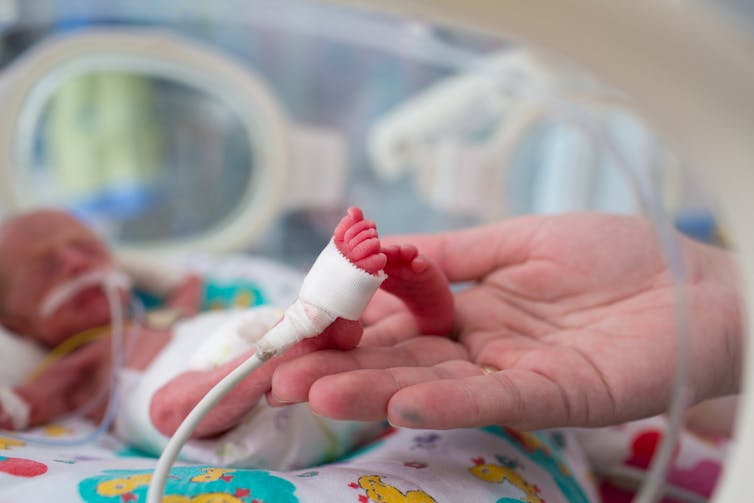
The Continuing Tragedies of Home Birth and the Rights of the Future Child
By Lach De Crespigny and Julian Savulescu
Windsor Coroner’s Court has heard that a mother died within hours of giving birth at home after a private midwife committed a horrifying catalogue of errors . According to reports, the woman had previously delivered twins by emergency caesarean section, one of which later died. Her husband said his wife was ‘brainwashed’ into having a home birth by the midwife, who insisted it was safe. The Royal College of Obstetricians and Gynaecologists advise delivery in hospital after caesarean section so that an emergency caesarean delivery can be carried out if necessary. The midwife denied trying to persuade the couple to have a home birth. However she has greater responsibilities than this; as professionals we should try to persuade women to deliver in hospital if this is a safer option. But the midwife seems to have prioritized homebirth over life itself when she reportedly stated:
“Claire had a great pregnancy, she had a really lovely spontaneous birth at home and I hope Simon in time will remember that”
The AAP report on circumcision: Bad science + bad ethics = bad medicine
See Brian’s most recent previous post by clicking here.
See all of Brian’s previous posts by clicking here.
Follow Brian on Twitter by clicking here.
The AAP report on circumcision: Bad science + bad ethics = bad medicine
For the first time in over a decade, the American Academy of Pediatrics (AAP) has revised its policy position on infant male circumcision. They now say that the probabilistic health benefits conferred by the procedure just slightly outweigh the known risks and harms. Not enough to come right out and positively recommend circumcision (as some media outlets are erroneously reporting), but just enough to suggest that whenever it is performed—for cultural or religious reasons, or sheer parental preference, as the case may be—it should be covered by government health insurance.
That turns out to be a very fine line to dance on. But fear not: the AAP policy committee comes equipped with tap shoes tightly-laced, and its self-appointed members have shown themselves to be hoofers of the nimblest kind. Their position statement is full of equivocations, hedging, and uncertainty; and the longer report upon which it is based is replete with non-sequiturs, self-contradiction, and blatant cherry-picking of essential evidence. Both documents shine as likely examples of a “lowest common denominator” mélange birthed by a divided committee, some of whose members must be well aware that the United States is embarrassingly out of tune with world opinion on this issue.
Replying to a critic: My last circumcision post (for a while) – with video debate
See Brian’s most recent previous post by clicking here.
See all of Brian’s previous posts by clicking here.
Follow Brian on Twitter by clicking here.
VIDEO DEBATE LINKED TO BELOW – ARI KOHEN AND I DISCUSS THE ETHICS OF RELIGIOUSLY-MOTIVATED CIRCUMCISION
Ari Kohen doesn’t like my recent post about circumcision—the one in which I argue that it is unethical to remove healthy tissue from another person’s body without first getting his permission. I then go on to say that religious justifications cannot override this basic principle. Here’s that post again.
Ari is a professor of political theory and human rights at the University of Nebraska at Lincoln. In this blog post, he takes me to task for failing to take seriously the religious commitments of Jews in framing my arguments. And while he gets some things wrong about, for example, the relevance of “sexually-sensitive tissue” to my overall reasoning; and while he misses the point of my bringing up female genital cutting entirely (I’ve since edited my post to clear up any lingering ambiguity) – he is probably right that my approach to debating this issue is unlikely to win me any converts from within the ranks of the religious.
Professional roles and private lives: How separate are they?
The Daily Mail likes to ‘out’ teachers as porn stars. It did so again last week. The standard response to the discovery that a teacher stars in adult films or ‘moonlights’ as a stripper is to sack him or her, even if (as in one case) two decades have elapsed since involvement in the adult entertainment industry. The thing is, as is frequently noted in these teachers’ defense, they haven’t done anything illegal. Moreover, what they were doing was done in their own time. So, what can be the justification for dismissal? Are they still in the role of teacher at home?
I think there are three possible avenues for justifying dismissal: character assessment, capacity to fulfill role, and duty to be a role model. Personally, I’m not sure if I am convinced by any of them and am keen to hear what you think. Continue reading
A Teeny-Weeny Baby Puzzle
I have been thinking about babies recently, for various reasons (let’s call them Saul). It had always struck me that procreation was a classic example of a prisoner’s dilemma. It was good for each couple to have children, but if everyone churned out these resource-chomping monsters it was disastrous for us all.
That was until friends (philosophers) kindly pointed out that study after study shows that having children actually makes people unhappy. Continue reading
Love and other drugs, or why parents should chemically enhance their marriages
By Brian Earp
See Brian’s most recent previous post by clicking here.
See all of Brian’s previous posts by clicking here.
Follow Brian on Twitter by clicking here.
Love and other drugs, or why parents should chemically enhance their marriages
Valentine’s day has passed, and along with it the usual rush of articles on “the neuroscience of love” – such as this one from Parade magazine. The penner of this particular piece, Judith Newman, sums up the relevant research like this:
It turns out that love truly is a chemical reaction. Researchers using MRIs to look at the brain activity of the smitten have found that an interplay of hormones and neurotransmitters create the state we call love.
My humble reckoning is that there’s more to “the state we call love” than hormones and neurotransmitters, but it’s true that brain chemistry is heavily involved in shaping our experience of amour. In fact, we’re beginning to understand quite a bit about the cerebral circuitry involved in love, lust, and human attachment—so much so that a couple of Oxford philosophers have been inspired to suggest something pretty radical.
They think that it’s time we shifted from merely describing this circuitry, and actually intervened in it directly—by altering our brains pharmacologically, through the use of what they call “love drugs.”
My son’s dyslexic, and I’m glad
By Charles Foster
My son is dyslexic, and I’m glad.
Most people think that I am deranged or callous. But I have two related reasons, both of which seem to me to be good.
The first is that his dyslexia is an inextricable part of him. I can’t say: ‘This is the pathological bit, which I resent’, as one might say of a tumour. Take away his dyslexia, and he wouldn’t be the same person, but able to read and write. He wouldn’t be him. That would be far too high a price for me to pay. And for him to pay? Well, there you run into Parfit’s non-identity problem.
Using Close Genes: A Suggestion
Today, if a gay couple wants to have a child, they have two main options: Either (1) they adopt a child or (2) they get an egg from a donor, have it fertilized in a laboratory, and have a surrogate mother carry and give birth to their child.
These are both good options. Imagine, however, that a certain gay couple – let us call them Albert and Mark – wants a child that genetically belongs to both of them. If they want this, then option (1) will not do the trick. Option (2) will be somewhat better, but the child will then carry genetic material from only one of the two.
This does not satisfy Albert and Mark.
Is their problem solvable? Can Albert and Mark have a child that, genetically, is truly theirs? The answer that first strikes one is no, since this seemingly requires technology beyond reach.
It is easily solvable, however, if we just think outside the box. The solution is that the egg fertilized by Albert’s sperm should come from Mark’s sister, or if still fertile, form Mark’s mother. This would not give a perfect genetic match, but a decent one – and it would be safe, affordable, and fully possible. Even legal, I assume, since it does not imply inbreeding.
Why should not gay couples do this? Or, for that matter: Why should not straight couples where one party is infertile?
Is Half an Abortion Worse than a Whole One?
Last week, the New York Times Magazine included an interesting article about abortion by Ruth Padawer. It provoked not a little angst and soul-searching among members of the pro-choice community, as well as some exultant pronouncements from anti-abortionists highlighting supposed inconsistencies in the pro-choice position.
The Times article profiled a number of women who chose to “reduce” their twin pregnancies to a single fetus, recounting the emotions and ethical issues grappled with by women, their partners, and the doctors who perform (or refuse to perform) this type of selective abortion. The procedure, which according to Padawer is “usually performed aound Week 12 of pregnancy”, involves the doctor selecting under an ultrasound scan a healthy fetus whose chest is lethally injected. It shrivels in the womb, whilst its twin is carried to term. In the cases in question, the procedure is not performed for medical reasons, but because the woman has chosen for social reasons to carry only one child to term. Although reductions arose historically as a procedure that was medically indicated – reducing risky quint, quad or triplet pregnancies to twins that had a much better chance of survival – most practitioners have not recognized reduction below twins as having an adequate medical justification. Some practitioners consequently refuse to perform the procedure, but others perform it willingly. As Dr. Richard Berkowitz explained: “In a society where women can terminate a single pregnancy for any reason – financial, social, emotional – if we have a way to reduce a twin pregnancy with very little risk, isn’t it legitimate to offer that service to women with twins who want to reduce to a singleton?” Dr. Berkowitz’s question is a good one, as is the main question that Padawer raises: “What is it about terminating half a twin pregnancy that seems more controversial than reducing triplets to twins or aborting a single fetus? After all, the math’s the same either way: one fewer fetus.”
So what is it that makes “terminating half a twin pregnancy” seem more controversial than aborting a single fetus? Does our almost universal uneasiness about it show a fundamental inconsistency in pro-choice thinking, or is there a consistent pro-choice position that pays sufficient respect both to a woman’s presumed right to choose, and to our uneasy intuitive reactions to twin reduction?


Recent Comments