Simon Rippon’s Posts

Is Drug Addiction a Lifestyle Choice?

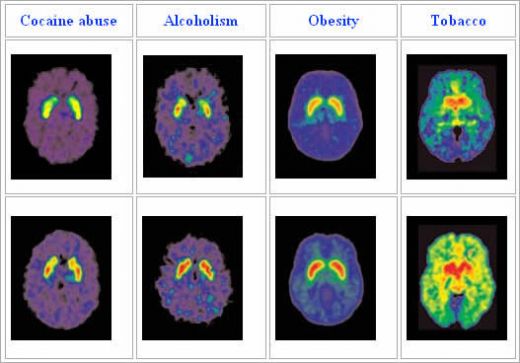
According to BBC News this week, the brains of some people “may be wired for addiction.” A study has come out in the journal Science that presents evidence of abnormal brain structures that were found in drug addicts and their non-addicted siblings. The lead researcher, Dr Karen Ersche, was quoted by the BBC as saying that the study “shows that drug addiction is not a choice of lifestyle, it is a disorder of the brain and we need to recognize this.”

Has the Ersche et al study in fact shown that drug addiction is not a lifestyle choice? Has it proven that drug addicts should be treated as innocent patients with medical problems rather than being subject to moral censure for their failure to exert self-control, and for their irresponsible and often deeply anti-social behaviour? No! In fact, it is likely that no possible neuroscientific evidence could show such a thing.

Continue reading

Lawmaker Steals Leather Pants: Brain May Be Responsible, Lawyer Says

The title of this post is an edited version of a headline that appeared this week at ABC news. The story behind it is that a Californian politician named Mary was caught shoplifting, and her lawyer says that her impaired judgment may have been caused by a benign brain tumour.

We can accept that in principle, a brain tumour could undermine  Mary’s moral responsibility and excuse  her actions, because we now know that tumours can press on parts of the brain and prevent them functioning properly – causing all kinds of unusual thoughts and behaviours. And Mary could hardly be held responsible for her having a brain tumour. She didn’t choose to have it; it just happened to her.

Continue reading

Settling the Final Reckoning for Organ Donors

In the news this week, the Nuffield Council on Bioethics suggests that the NHS should test the idea of paying for the funerals of organ donors who have previously signed the organ donor register, in order to try to encourage more of the public to sign up. When I was asked to write about this proposal for the BBC’s web site, I found with surprise that I could think of no plausible ethical objections to it. This despite the fact that I’ve previously written here and elsewhere about the dangers of introducing a cash market for donor organs, and even about the dangers of other kinds of non-cash incentives. If the council’s proposal were found in trials to be both practically effective in increasing donations, and also affordable, then my clear view is  that it should be implemented in the UK.

Continue reading

Is Half an Abortion Worse than a Whole One?

Last week, the New York Times Magazine included an interesting article about abortion by Ruth Padawer. It provoked not a little angst and soul-searching among members of the pro-choice community, as well as some exultant pronouncements from anti-abortionists highlighting supposed inconsistencies in the pro-choice position.

The Times article profiled a number of women who chose to “reduce” their twin pregnancies to a single fetus, recounting the emotions and ethical issues grappled with by women, their partners, and the doctors who perform (or refuse to perform) this type of selective abortion. The procedure, which according to Padawer is “usually performed aound Week 12 of pregnancy”, involves the doctor selecting under an ultrasound scan a healthy fetus whose chest is lethally injected.  It shrivels in the womb, whilst its twin is carried to term. In the cases in question, the procedure is not performed for medical reasons, but because the woman has chosen for social reasons to carry only one child to term. Although reductions arose historically as a procedure that was medically indicated – reducing risky quint, quad or triplet pregnancies to twins that had a much better chance of survival – most practitioners have not recognized reduction below twins as having an adequate medical justification. Some practitioners consequently refuse to perform the procedure, but others perform it willingly. As Dr. Richard Berkowitz explained: “In a society where women can terminate a single pregnancy for any reason – financial, social, emotional – if we have a way to reduce a twin pregnancy with very little risk, isn’t it legitimate to offer that service to women with twins who want to reduce to a singleton?”  Dr. Berkowitz’s question is a good one, as is the main question that Padawer raises: “What is it about terminating half a twin pregnancy that seems more controversial than reducing triplets to twins or aborting a single fetus? After all, the math’s the same either way: one fewer fetus.”

So what is it that makes “terminating half a twin pregnancy” seem more controversial than aborting a single fetus? Does our  almost universal uneasiness about it show a fundamental inconsistency in pro-choice thinking, or is there a consistent pro-choice position that pays sufficient respect both to a woman’s presumed right to choose, and to our uneasy intuitive reactions to twin reduction?

Continue reading

A New Life Unexamined may be More Worth Living

Suppose that you’re part of an interracial, black African and white Caucasian, couple. You have a baby together, and immediately after the birth you phone around your friends and family to tell them the happy news. They all seem to have just one question, which you keep hearing over and over, immediately after you tell them that you have a new baby: “What skin tone does it have?”

As soon as you consider replying “light” or “dark” or “in-between”, you begin to wonder why the people you love are so strangely focussed on an unchosen and ultimately unimportant feature of your baby’s physical make-up. Do they think that your baby should be thought of or treated differently, merely on account of its skin colour? Instead of answering the question, you tell them this: “What does it matter? It’s not for us to impose our categories and expectations on the child. Let’s leave the child the freedom to form and choose its own identity as it grows old enough to do so.”

Continue reading

Could Groupons Save the World?

Two-and-a-half year old web start-up Groupon is a stunningly successful company. It reportedly turned down a six billion US dollar buyout offer from Google in December, and Reuters reports that is now planning an initial public offering that may value the company at between $15-20 billion. It has achieved this staggering valuation with a simple business model: every day in each of a number of cities (now hundreds worldwide) it offers on its web site a deal from a merchant wanting to access Groupon’s email subscribers in the local market. The daily deal might offer such luxuries as a massage, a day of paintball, a restaurant meal or hotel stay for two, or tooth whitening treatment, at a discount of about 50-70% off the regular price. The concept is that a minimum number of people have to sign up to the deal for it to be valid, so Groupon provides a bundle of willing buyers to the merchant. In return, the merchant provides what amounts to a bulk discount. The Groupon company makes money by operating as a middleman for payments: it sells buyers a voucher for the product, and Groupon passes on some of the money it received for the voucher to the merchant, keeping a chunk of it for itself.

Continue reading

Should Conservative Christians be Allowed to Care for Our Children?

Eunice and Owen Johns are Christian Pentecostalists who believe that sexual relations other than those within marriage between one man and one woman are morally wrong. They also want to be foster parents.

Should they be allowed to care for other people’s children? Derby city council have been reluctant to allow this, and the High Court has recently agreed with the council that the attitudes of potential foster carers to sexuality are a relevant legal consideration. Considering the moral question whether they should be allowed to foster – that is, the question of what the law ought to say about cases like this – my colleague Michelle Hutchinson cautiously says it all depends on the risks of harm to the child, and the risks of harm to society as a whole, but implies that her sympathies lie with the council. With one proviso, I believe we should allow Eunice and Owen Johns to foster – because to do anything else would be illiberal.

Continue reading

What is the Big Society?

When a lane is closed off for repairs, are you that driver who ignores all the  “change lane” signs as you zoom past the stationary line of traffic, then cut in at the very last moment? Are you someone who loves to go to the beach or park to enjoy the scenery, eat a picnic, and leave your rubbish strewn behind you? Are you a bank trader taking risks for profit that would be ridiculous – were it not for the fact that your bank is “too big to fail” and the government will have to step in and raid the public treasury to save it if the gamble goes the wrong way? Do you cheat on your taxes? When your country goes to war, are you one of the brave legions of Keyboard Kommandos who tirelessly blogs (and comments on blogs) in support of it, yet wouldn’t even dream of signing up and risking your life to fight for what you believe in? Do you never buy a round of drinks at the pub, or pick up the tab at a restaurant, though you can afford to do so, and enjoy it when others buy  for you?

Continue reading

If North Africa Starves Next Year, I’ll be Rich!

Inflation is swinging upward in the UK and it will surely cause us some irritation soon in the supermarkets. But most of us do not have difficulty putting enough food on the table for our families, and it’s easy for us to forget that things are different elsewhere. During the past few years sharp rises in food prices have contributed to widespread hunger in the third world and to civic unrest, including the recent toppling of the government in Tunisia,  and riots in countries including all of these: Algeria, Bangladesh, Burkina Faso, Cameroon, the Côte d’Ivoire, Egypt, Ethiopia, Indonsia, Kenya, Mozambique, Senegal, Somalia, Sudan and Yemen.

Continue reading

Sam Harris, the Naturalistic Fallacy, and the Slipperiness of “Well-Being”

This post is about the main argument of Sam Harris’s new book The Moral Landscape. Harris argues that there are objective truths about what’s morally right and wrong, and that science can in principle determine what they are, all by itself. As I’ll try to demonstrate here, Harris’s argument cannot succeed. I call the argument “scientistic” because those who take (a variation of) its first two premises to be obvious are led to exaggerate the importance of scientific measurement for determining what’s morally right, and correspondingly to underestimate the importance of moral reasoning and moral philosophy.

Continue reading

Authors

Affiliations