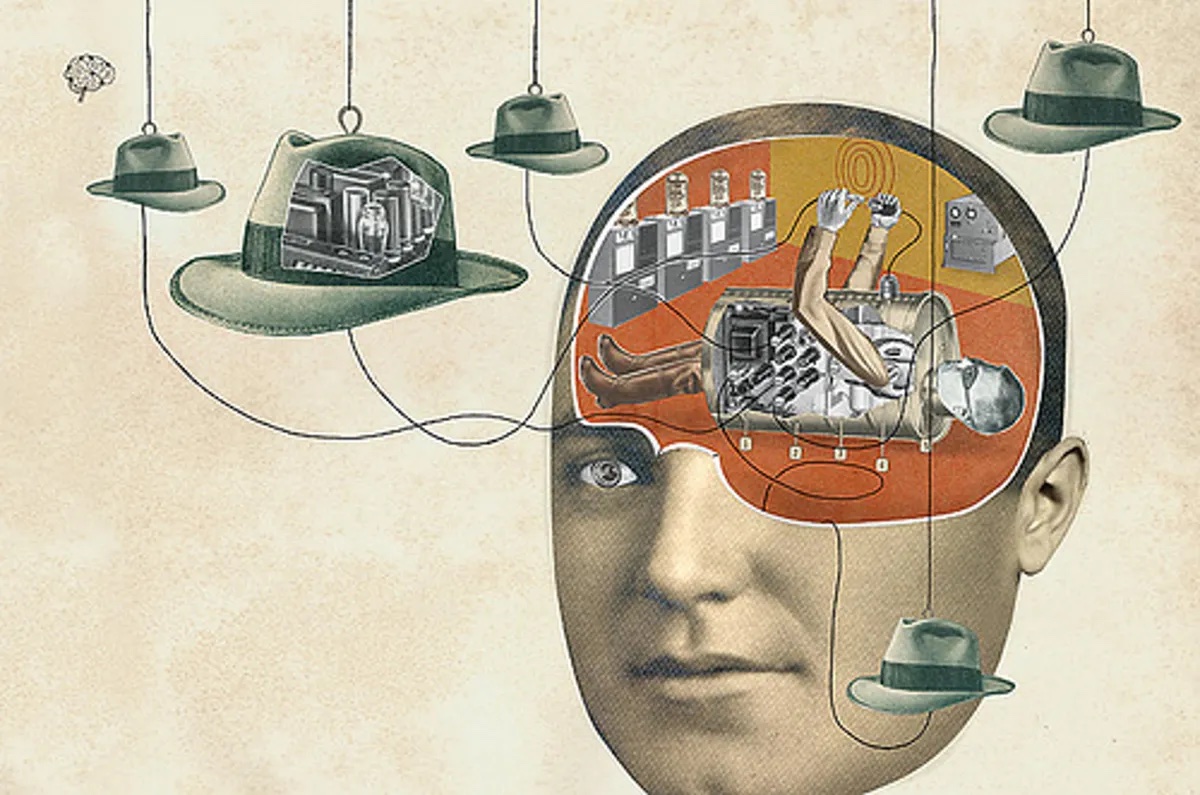
enhancement

How to deal with double-edged technology

By Brian D. Earp

 World’s smallest drone? Or how to deal with double-edged technology 

BBC News reports that Harvard scientists have developed the world’s smallest flying robot. It’s about the size of a penny, and it moves faster than a human hand can swat. Of course, the inventors of this “diminutive flying vehicle” immediately lauded its potential for bringing good to the world:

1. “We could envision these robots being used for search-and-rescue operations to search for human survivors under collapsed buildings or [in] other hazardous environments.”

2. “They [could] be used for environmental monitoring, to be dispersed into a habitat to sense trace chemicals or other factors.”

3. They might even behave like many real insects and assist with the pollination of crops, “to function as the now-struggling honeybee populations do in supporting agriculture around the world.”

These all seem like pretty commendable uses of a new technology. Yet one can think of some “bad” uses too. The “search and rescue” version of this robot (for example) would presumably be fitted with a camera; and the prospect of a swarm of tiny, remote-controlled flying video recorders raises some obvious questions about spying and privacy. It also prompts one to wonder who will have access to these spy bugs (the U.S. Air Force has long been interested in building miniature espionage drones), and whether there will be effective regulatory strategies capable of tilting future usage more toward the search-and-rescue side of things, and away from the peep-and-record side.

Continue reading

Brief announcement: Interview about ‘love drugs’ on “Q” with Jian Ghomeshi

By Brian D. Earp

Interview announcement

This is a brief note to alert the readers of Practical Ethics that research by myself, Anders Sandberg, and Julian Savulescu on the potential therapeutic uses of “love drugs” and “anti-love drugs” has recently been featured in an interview for the national Canadian broadcast program, “Q” with Jian Ghomeshi (airing on National Public Radio in the United States).

Here is a link to the interview.

Readers may also be interested in checking out a new website, “Love in the Age of Enhancement” which collects the various academic essays, magazine articles, and media coverage of these arguments concerning the neuroenhancement of human relationships.

Continue reading

Armstrong and Hesch: A tale of two athletes

Last week, shockwaves went through the sporting media as Nike officially cut ties with Lance Armstrong and Armstrong stood down as chairman of his Livestrong charity in the light of a massive swathe of damning evidence released by USADA, the USA’s anti-doping agency. Lost in the waves were the ripples of another doping story: little-known US runner Christian Hesch admitted to two years of EPO (erythropoietin; hormone controlling red blood cell production) use. Little needs to be said about the achievements of Armstrong, the most celebrated cyclist in modern sporting history. A ‘road warrior’, Hesch is a member of a sub-elite class of athletes who earn their living travelling from road race (running) to road race picking up small winnings, sometimes with a little travel/equipment support from racing teams. With a 3:58 mile best, he has never and will never make the Olympics; he is unknown outside of the USA’s running community where he made himself visible with flamboyant racing outfits and finish-line stunts.

In 2010, Hesch was hit by a car, picking up minor injuries and putting him ‘out of business’ for 5 months. With no workman’s comp, he turned to EPO to speed his return to racing fitness. While Armstrong was retiring from competitive cycling, Hesch was making trips down to Tijuana, Mexico, and smuggling EPO vials back into the USA, stuffed into his pockets. Armstrong was part of what USADA has referred to as “the most sophisticated, professionalised and successful doping programme that the sport has ever seen”; Hesch was architect of his own doping programme, injecting himself 54 times over the course of two years. He was rarely tested; eventually team-mates from Nike Team Run LA found evidence of drug use in his possession and presented him with an own-up-or-we’ll-tell ultimatum. They contacted USADA on September 6th and Hesch promptly confessed. While breaking the news himself on popular running forum http://www.letsrun.com, he posted “I want to make it clear that I don’t blame anyone for any & all feelings against me, it’s my bed that I’ve made and I will sleep in it… hopefully, someday I can earn your respect back.”

When it comes to the very top level endurance sport athletes, where the bar is set in terms of legal vs. illegal enhancements appears largely irrelevant. The current legal list currently includes altitude tents for the ‘natural’ EPO effect, high doses of caffeine, medication to correct previously undiagnosed asthmatic and thyroid conditions and a lot more. The USADA evidence suggests that in many cases where illegal doping is happening in combination with these legal supplements, it is being very closely monitored by medical teams. The argument for saying “make everything legal and be damned with it” is clear.

Is the same true for athletes coming through, and athletes on the cusp of the professional ranks? Is a scenario where, to compete with the pros or even be noticed it is a requirement to be on EPO and HGH, in the best interests of athletes; especially young athletes? Become a top athlete and you have a medical team to monitor you; until then, the choice may end up being between Tijuana, a syringe and a bathroom stall, or being an also-ran. Consider also the implications for athletes in developing nations like Kenya (where reports of more widespread doping are starting to appear); drugs with significant risks attached like EPO can be fairly cheap and easy to procure, medical supervision can be less so.

Given that we cannot protect all athletes with medical monitoring, is it better to protect them with a culture in which use of these drugs is wrong,  and with the knowledge that even the mightiest and best-protected of cheaters can fall?

Why Does the USADA Want Convicted Dopers to Win the Tour de France?

Lance Armstrong may be stripped of his 7 Tour De France wins after he announced today that he will mount no defence against USADA’s charges of doping throughout his career.

USADA have claimed this as a victory, calling the result “a reassuring reminder that there is hope for future generations to compete on a level playing field without the use of performance-enhancing drugs”.

If Armstrong is stripped of his Tour victories, the new list of “winners” will contain many names familiar to those who have followed cycling’s infamous doping scandals: Jan Ullrich (banned for doping), Ivan Basso (banned for doping), Andreas Klöden (accused of blood doping- the case was closed when he made a 25000 Euro payment to settle the charges, without an admission of guilt. NADA, the German anti-doping agency, have recently expressed an interest in re-opening the case),  and Joseba Beloki (implicated though not charged in Operacion Puerto investigations). Of the new victors, only Jaan Kirsipuu has been neither implicated nor proven to be doping. If he is the hope that USADA is banking on, it is a slim one. Along with many who have previously been banned for doping, Basso and Klöden are still riding, still performing at a competitive elite level (5th in Giro d’Italia 2012 and 11th in Tour de France 2012 respectively). The Olympic gold medal in road cycling was won by Vinokourov, another convicted doper.

Continue reading

The dignity of the referee

FIFA want referees to be tested for drugs: delegates at FIFA’s medical congress were told by FIFA officers that referees in the future might be tested for doping. “We have to consider referees as part of the game,” said FIFA’s chief medical officer Jiri Dvorak. “We do not have an indication that this is a problem but this is something we have to look at. The referees are a neglected population.”

One might of course wonder whether this is typical extension of regulations beyond where they make sense, perhaps driven by Parkinsonian expansion of bureaucracy. If there has not been any indications of a problem, it doesn’t seem rational to try to solve it. To investigate whether there is an undetected problem in the first place and then try to solve it if there is one is rational, but starting out with banning doping in judges regardless of whether it matters sounds a bit like a “everything looks like a nail when you have a hammer” mindset from the anti-doping organisations.

Maybe some doping of referees might actually make the sport better?

Continue reading

Psychiatric drugs to enhance conformity to religious norms, and conscientious objection

An article in the Israeli newspaper Haaretz reports on the (alleged) frequent use of psychiatric drugs within the Haredi community, at the request of the religious leaders, in order to help members conform with religious norms. Haredi Judaism is the most conservative form of Orthodox Judaism. It is sometimes referred to by outsiders as ultra-Orthodox. Haredim typically live in communities that have limited contact with the outside world. Their lives revolve around Torah study, prayer and family.

In December 2011, the Israel Psychiatric Association held a symposium entitled “The Haredi Community as a Consumer of Mental-Health Services”.  One of the speakers was Professor Omer Bonne, director of the psychiatry department at Hadassah University Hospital. Professor Bonne is claimed to have said that sometimes yeshiva students (yeshiva is a religious school) and married men should be given antidepressants even if they do not suffer from depression, because these drugs also suppress sex drive.

Continue reading

Is it OK to have an affair if your partner is asexual?

I am desperate to start a sexual relationship with an old acquaintance but his wife, who has no interest in sex, would be appalled if she knew. Does that matter?

I read this in the Guardian’s ‘Life & Style’ section. Every week, a reader can present a dilemma she/he is faced with in her/his ‘private’ life and ask other readers for advice.

The full story goes like this:

I recently reconnected with an old classmate from my teens, and we fell in love almost immediately. We are in our early 50s and both in long marriages to good people whom we love. Leaving our spouses is not an option [....] Despite our desire for each other and the fact that his wife and my husband may be asexual, my friend and I have not slept with each other. My husband has given me permission to have a lover, but my friend’s wife would be appalled if he asked for the same set-up. Shouldn’t someone with no interest in sex and minimal romantic attachment to their spouse (they are like roommates) allow that spouse to fulfil her or his needs for stimulation and affection (discreetly) elsewhere without calling it “cheating”? My friend and I are moral people, but life is short.

Some of the readers’ replies are:

Whose word do we have for it that his wife is asexual?…Oh, only his… What a surprise.

Of course it is ok!  Go and fuck with everyone in sight and don’t bother! :-)

Fortunately, other replies are more sophisticated. Most people seem to acknowledge the dilemma is real. None of the proposed options are ideal. For example, those who suggest asexual married couples should never have extramarital sexual relationships at the same time acknowledge that this solution is not ideal as sexual frustration may build up and may have devastating effects on the marriage. Those who suggest the individuals who are attracted to each other (henceforth ‘sexual’ individuals) should be honest about it to their partners, and that the ‘affair’ (consented to by all parties concerned) may be justified,  realise this will make their ‘asexual’ partners unhappy, with potentially devastating effects for both marriages. Perhaps some will find it obvious that one of these alternatives is better than the other, but surely we must except that whichever option one chooses, there is some harm, or risk of harm.

Could what Savulescu and Sandberg, in their 2008 paper, have called ‘love drugs’  help resolve the dilemma?

Continue reading

Rick Santorum, birth control, and “playing God”

By Brian Earp

See Brian’s most recent previous post by clicking here.

See all of Brian’s previous posts by clicking here.

Follow Brian on Twitter by clicking here.

Rick Santorum, birth control, and “playing God”

Rick Santorum thinks that birth control is immoral. Santorum, a former Senator from Pennsylvania, is one of two human beings – if the polls have it right – likeliest to become the Republication nominee for President of the United States this election cycle.

Continue reading

Love and other drugs, or why parents should chemically enhance their marriages

By Brian Earp

See Brian’s most recent previous post by clicking here.

See all of Brian’s previous posts by clicking here.

Follow Brian on Twitter by clicking here.

Love and other drugs, or why parents should chemically enhance their marriages

Valentine’s day has passed, and along with it the usual rush of articles on “the neuroscience of love” – such as this one from Parade magazine. The penner of this particular piece, Judith Newman, sums up the relevant research like this:

It turns out that love truly is a chemical reaction. Researchers using MRIs to look at the brain activity of the smitten have found that an interplay of hormones and neurotransmitters create the state we call love.

My humble reckoning is that there’s more to “the state we call love” than hormones and neurotransmitters, but it’s true that brain chemistry is heavily involved in shaping our experience of amour. In fact, we’re beginning to understand quite a bit about the cerebral circuitry involved in love, lust, and human attachment—so much so that a couple of Oxford philosophers have been inspired to suggest something pretty radical.

They think that it’s time we shifted from merely describing this circuitry, and actually intervened in it directly—by altering our brains pharmacologically, through the use of what they call “love drugs.”

Continue reading

Enhanced Consequentialism: Up, Up… and Away?

Last week Saturday Morning Breakfast Cereal featured a fun, and genuinely thought-provoking, cartoon. Click below to see the cartoon at FULL SIZE, then come back to hear my take on it:


Poor Superman, trapped in a spiral of consequentialist logic! If one really is as powerful as Superman, then it’s no use pleading for a bit of “me time” on the grounds that one’s individual decisions don’t make that much of a difference. For Superman, it really is true that “every second of quibbling is another dead baby.” Even if we let Superman assign a little more value to his own interests and projects (such as fighting criminals) than to those of everyone else, his preferences still completely disappear in the consequentialist calculus. He might find a life of turbine-operation incredibly miserable, but the loss of good to others if he stops is just astronomically large.

Fine, you’ll say: consequentialism makes outrageous demands of comic book characters. So what? Well, I’m about to argue, the rest of us may soon become much more like Superman in this regard – and if you’re a consequentialist, you don’t get a (moral) choice in the matter.

Continue reading

Authors

Affiliations